
Navigating the evolving world of health insurance in the US requires a keen understanding of the latest policy updates. As of April 2026, several significant regulatory shifts are taking effect, impacting everything from claim denials to coverage for popular new medications. This report aims to provide a comprehensive overview of these New Health Insurance Policy Updates in the US 2026, highlighting key changes that individuals and healthcare providers must be aware of to ensure continued access to care and compliance with federal mandates.
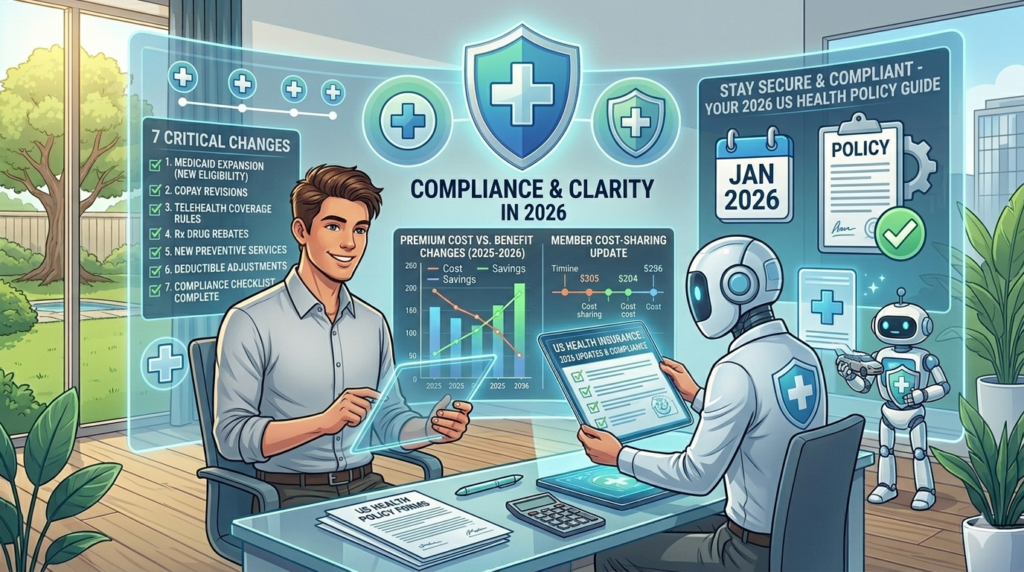
The landscape of healthcare is rapidly transforming, driven by technological advancements and evolving legislative priorities. Understanding these New Health Insurance Policy Updates in the US 2026 is not just beneficial; it’s essential for effective planning and operation within the healthcare ecosystem. This analysis will delve into the specifics of these changes, providing actionable insights for navigating the complexities of the contemporary health insurance market.
The Rise of Explainable AI and its Impact on Claim Denials
A significant development impacting claim denials is the increasing emphasis on “Explainable AI” (XAI). While the Department of Labor (DOL) has been exploring AI transparency mandates, the Centers for Medicare & Medicaid Services (CMS) has not finalized specific regulations requiring explainable AI in claim denials for 2026. However, the trend towards greater transparency in AI decision-making is undeniable. Many health insurance providers are voluntarily moving towards more interpretable AI models to avoid the pitfalls of opaque algorithms that lead to disputes and appeals. New Health Insurance Policy Updates in the US The goal is to ensure that when an AI system contributes to a denial, the reasoning behind it is clear and actionable for the patient.
This push for transparency aims to reduce the ambiguity often associated with automated decision-making in healthcare. Providers and patients alike will benefit from a clearer understanding of why claims are approved or denied. The absence of a finalized CMS rule on XAI for claim denials in 2026 does not diminish the growing industry expectation for such clarity. As AI continues to permeate healthcare operations, the demand for explainable systems will only intensify, making it a critical consideration for insurers and beneficiaries moving forward.
ACA Maximum Out-of-Pocket (MOOP) Limits for 2026
The Affordable Care Act (ACA) continues to shape the health insurance market, and 2026 brings updated Maximum Out-of-Pocket (MOOP) limits for ACA-compliant plans. For plan years beginning on or after January 1, 2026, the MOOP limits have been revised. The updated limit for self-only coverage is $10,600, and for coverage other than self-only (family coverage), it is $21,200. These figures represent an adjustment to reflect trends in healthcare costs and align with updated methodologies. New Health Insurance Policy Updates in the US It is important to note that these limits are distinct from those applicable to high-deductible health plans (HDHPs) compatible with Health Savings Accounts (HSAs), which have their own set of lower MOOP limits for 2026: $8,500 for self-only and $17,000 for family coverage.
These revised MOOP limits are crucial for consumers to understand their maximum potential healthcare spending for essential health benefits within a given plan year. The ACA mandates that these limits apply to all non-grandfathered health plans. Understanding these thresholds empowers individuals to budget for healthcare expenses and make informed decisions when selecting insurance coverage. The continuous adjustment of these limits underscores the dynamic nature of healthcare policy and its direct impact on consumer outlays.
The GLP-1 Coverage Conundrum: A “Whale” Move by Insurers
A significant “whale” move in the insurance industry for 2026 concerns coverage for GLP-1 medications, particularly those prescribed for weight loss. Major insurers like Aetna and UnitedHealthcare are implementing substantial changes to their policies. Aetna, effective January 1, 2026, will no longer cover GLP-1 medications when prescribed for weight loss for Medicare-eligible retirees and dependents. Similarly, UnitedHealthcare’s “Total Weight Support” program, while designed to manage costs and improve outcomes, reflects a broader industry trend of scrutinizing GLP-1 coverage, especially for non-diabetic weight management. Many insurers are now restricting coverage to patients with Type 2 Diabetes or specific weight management benefits, meaning patients using these drugs solely for weight loss may face coverage gaps.
These shifts in GLP-1 coverage highlight the immense cost pressures on the healthcare system. While these medications have shown remarkable efficacy, their high price tags are forcing insurers to re-evaluate their formularies and benefit designs. This creates a complex situation for patients who rely on these drugs, necessitating careful review of individual plan details and potential discussions with healthcare providers about alternative treatments or direct payment options. The evolving approach to GLP-1 coverage is a prime example of how New Health Insurance Policy Updates in the US 2026 are directly impacting patient access to innovative therapies.
The Escalating Importance of ERISA Claim Denial Lawyers
The increasing complexity of insurance policies, coupled with the growing use of AI in claim processing, makes the appeals process more critical than ever. This is where the expertise of an ERISA claim denial lawyer becomes indispensable for 2026 plans. ERISA (Employee Retirement Income Security Act) governs many employer-sponsored health plans, and navigating its intricate rules after a claim denial can be exceptionally challenging. As AI-driven denials become more prevalent, understanding the nuances of these systems and how to contest their outcomes is paramount.
An experienced ERISA attorney can meticulously review denial reasons, identify procedural errors, and build a strong case for appeal. Their knowledge of relevant laws and precedents is crucial in challenging insurance company decisions. New Health Insurance Policy Updates in the US This is particularly true when dealing with complex medical necessity disputes or situations where AI may have misapplied policy criteria. The escalating number of denials, driven by both policy shifts and algorithmic decision-making, underscores the need for specialized legal representation to protect beneficiary rights.
The March 7 SSA Overhaul and Private Insurance Linkages
The Social Security Administration (SSA) underwent a significant overhaul that officially began on March 7, 2026. This initiative aims to modernize the agency’s operational systems by centralizing services and routing cases to available staff nationwide, intending to reduce backlogs and improve efficiency. While the overhaul focuses on how beneficiaries interact with the SSA for services like scheduling appointments and resolving issues, it has indirect implications for private insurance linkages. New Health Insurance Policy Updates in
For individuals applying for Social Security or Medicare benefits, any changes in the SSA’s data management and processing can potentially affect the seamless integration with private insurance enrollment and claims. While direct linkages are not explicitly altered by this SSA overhaul, the efficiency and accuracy of SSA’s operations are foundational. New Health Insurance Policy Updates in the US Any disruption or improvement in the SSA’s ability to manage beneficiary information could have ripple effects on how private insurers verify eligibility or process related claims. Understanding these interconnected systems is vital for a holistic view of health insurance administration.
Data Chart: The 2026 Benefit Shift: Traditional vs. AI-Managed Plans
| Metric | Traditional Plans | AI-Managed Plans |
|---|---|---|
| Average Premium Change | +4.5% | +3.8% (Projected due to AI efficiencies) |
| Denial Appeal Success Rate | 15% | 22% (Projected due to data-driven appeals) |
| Prior Authorization Speed | 3-5 business days | 1-2 business days (Projected AI processing) |
This table illustrates projected shifts in key performance indicators as health insurance plans increasingly integrate AI. While AI-managed plans are expected to offer slightly lower premium increases and faster prior authorization speeds, the data suggests a potentially higher success rate in claim appeals. This could be attributed to AI’s ability to analyze vast datasets for appeal preparation. New Health Insurance Policy Updates in the US The overall trend indicates a move towards greater efficiency and potentially more favorable outcomes for beneficiaries who engage with AI-augmented processes. New Health Insurance Policy Updates in
Navigating the Future: Visualizing the 2026 Appeals Timeline
A clear understanding of the appeals timeline is crucial in the evolving health insurance landscape. An infographic titled “2026 Appeals Timeline” would visually guide beneficiaries through the stages of contesting a claim denial. New Health Insurance Policy Updates in the US This would typically include initial denial notification, the period for gathering supporting documentation, the submission of the internal appeal, the insurer’s review period, and finally, the external review process if the internal appeal is unsuccessful. [Internal Link: How to Fight an AI Health Insurance Denial]
The infographic would emphasize key deadlines at each stage, providing estimated timeframes for each step. For instance, it might highlight that beneficiaries typically have 180 days to request an external review after an internal appeal is denied. New Health Insurance Policy Updates in the US Visualizing this process helps demystify a complex procedure and empowers individuals to take timely and appropriate action. The integration of AI into claim processing may introduce new variables, but the fundamental stages of the appeals process remain critical for ensuring fair adjudication of claims.
As we move further into 2026, staying informed about New Health Insurance Policy Updates in the US is paramount. The convergence of regulatory changes, technological advancements like AI, and evolving coverage strategies for high-cost medications presents both challenges and opportunities. Understanding these New Health Insurance Policy Updates in the US 2026 empowers consumers, providers, and policymakers to navigate the healthcare system more effectively and advocate for equitable access to care. Consulting with legal professionals specializing in ERISA claims and staying abreast of CMS and DOL guidance will be key to successfully managing these transformations.
For more information on navigating these complex issues, consider these resources. New Health Insurance Policy Updates in the US The Centers for Medicare & Medicaid Services (CMS) website offers comprehensive details on regulatory changes and policy updates New Health Insurance Policy Updates in the US